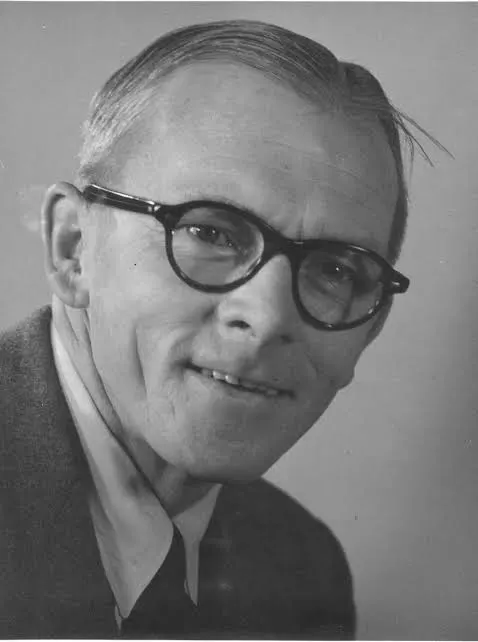
In this edition of Author Spotlight, we will examine the life and works of renowned Ugandan poet Okot p’Bitek. To read Okot p’Bitek is to feel the ground shake beneath a traditional dance, punctuated by sharp, roaring laughter at the absurdity of modern posturing. While many African writers of his generation debated identity in complex, academic language, Okot took the argument straight to the people using biting humor and the rich oral traditions of the Acholi. He pioneered the “comic monologue” style in African poetry, famously weaponizing the voice of an uneducated village woman to dismantle the pretensions of the Westernized elite. He was a cultural warrior who believed that true freedom was impossible until Africans stopped trying to wear clothes tailored in Europe for souls born in the tropics.
Birth and Early Years
Born on June 18, 1931, in Gulu, northern Uganda, Okot’s childhood was shaped by the creative wealth of the Acholi people. His father was a master storyteller and wit, while his mother was a renowned traditional singer and composer. From them, Okot inherited a deep reverence for the spoken word, traditional dance, and the intrinsic rhythm of communal gatherings. He grew up knowing that art was not something locked away in a gallery or a textbook, but a living, breathing force that gave communities their sanity and pride.
Education
Okot’s journey was anything but conventional. He attended King’s College Budo, where his talents were so diverse that he actually played as a winger for the Uganda National Football Team in the 1950s. A tour with the team to England opened a door for him to stay and study. He went on to earn a certificate in Education from Bristol, a law degree from Aberystwyth University, and a B.Litt. in Social Anthropology from Oxford University. Yet, despite his stellar Western credentials, Okot remained proudly unimpressed by academic stuffiness, using his education purely to sharpen his tools for cultural defense.
Influences
His primary and most significant muse was the Acholi oral tradition. He was deeply influenced by the wer, the traditional songs sung during ceremonies, and the community courtyard discussions where elders used sharp proverbs to teach morality. Okot was also triggered by the rise of the “been-tos” – Africans who had gone abroad and returned looking down upon their own heritage. His work became a direct, satirical broadside against this cultural amnesia, driven by the belief that Africa’s indigenous philosophy was far more sophisticated than anything imported from the West.
Literary Legacy
Okot p’Bitek’s literary legacy is forever anchored by his 1966 masterpiece, Song of Lawino. Originally written in the Acholi language as Wer per Lawino before he translated it into English, the poem is a fierce, brilliant lament by a rural woman whose husband, Ocol, has fallen blindly in love with Western ways. Lawino mocks Ocol’s straight, chemically treated hair, his reliance on clocks instead of the sun, and his sudden disgust for his own people’s cooking. The book was a literary earthquake, defining the East African poetry landscape for decades.

He followed this with Song of Ocol (1970), giving the husband a chance to respond with his own bitter, self-hating defense of modernity, and later expanded the universe with Song of a Prisoner and Song of Malaya. Okot didn’t just write poems; he created a whole new genre – the East African “Song School” – inspiring a generation of writers to drop formal European structures and write poetry that could be sung to the beat of an African drum.
To truly appreciate the expanse of Okot’s legacy, one must see him not just as a poet, but as a fearless cultural anthropologist and storyteller who fought on every literary front. His creative journey actually began with fiction; long before his famous poems, he published the 1953 Acholi-language novel Lak Tar Miyo Kinyero Wi Lobo (later translated as White Teeth), which poignantly explored the crushing economic realities and migration of young northern Ugandans to the south. His iconic poetry collections – Song of Lawino, Song of Ocol, Song of a Prisoner, and Song of Malaya – fundamentally decentralized Eurocentric verse structures, proving that African poetry could be earthy, colloquial, and devastatingly modern while remaining entirely indigenous.
Beyond his creative works, Okot was a relentless scholar determined to decolonize how African traditions were viewed by the rest of the world. Through critical nonfiction works like African Religions in Western Scholarship and Religion of the Central Luo, he vigorously dismantled the patronizing, colonial interpretations of African spiritual systems. His dedication to safeguarding oral art forms culminated in rich folklore collections like Acholi Folk Tales and Hare and Hornbill, ensuring the wisdom of the village square was properly canonized. By uniting the novelist, the poet, and the cultural theorist, Okot p’Bitek did not simply critique post-colonial mimicry; he provided a completely independent, vibrant alternative rooted in Africa’s own intellectual history.
Honours
The world recognized Okot as a force of nature. He was a foundational voice in the famous Makerere University Writers’ Workshop, helping to pivot East African literature away from Eurocentric models. He served as the Director of the Uganda National Theatre, organizing vibrant cultural festivals that took art out of elite spaces and into the hands of ordinary citizens. Despite facing exile during the brutal dictatorship of Idi Amin, he continued to teach and write across Kenya, Nigeria, and the United States, proving that his voice could never be silenced by borders.
Okot p’Bitek returned to Uganda in the early 1980s, where he was appointed the first Professor of Creative Writing at Makerere University. His reunion with the soil he loved was tragically short-lived; he passed away on July 20, 1982, in Kampala. He left behind a legacy of unapologetic cultural pride, a reminder that the ultimate act of liberation is to dance to your own song. He remains the definitive champion of indigenous African wisdom, a writer who looked at the modern world and chose to stay anchored in the dust of the village square.
That brings us to the end of this week’s Spotlight on the iconoclast of the savannah, Okot p’Bitek. Be sure to join us for our next edition, where we will look into the life and works of another literary giant whose words impacted the course of history.