
In this edition of Author Spotlight, we will examine the life and works of renowned South African writer Sindiwe Magona, a woman whose life story is perhaps the most powerful book she ever “wrote.” Magona didn’t just witness the history of South Africa; she survived it, challenged it, and eventually narrated it with a voice that is as comforting as a grandmother’s embrace.
To encounter Sindiwe Magona is to encounter the “unconquerable soul.” She is a writer who found her voice in the domestic quarters of white suburbs and the dusty streets of Gugulethu, turning the “small” lives of ordinary women into epic tales of endurance. She doesn’t just write about apartheid as a political system; she writes about how it felt to try and keep a family together, to find joy in a shack, and to maintain one’s dignity when the world is trying to strip it away.
Birth and Early Years
Born in 1943 in the village of Gungululu in the Eastern Cape, Sindiwe’s early years were rooted in the traditions of the Xhosa people. She grew up with the rhythm of communal life, but her journey soon took her to the townships of Cape Town. Her life took a difficult turn when, as a young mother of three, she was abandoned by her husband. At 23, she found herself working as a domestic servant – a “maid” in the homes of white families. Many would have seen this as a dead end, but for Sindiwe, it was the beginning of an extraordinary observation of human nature and inequality.
Education
Sindiwe is the ultimate champion of “lifelong learning.” While working as a domestic worker and raising her children alone, she studied by correspondence, huddled over books by candlelight. She eventually earned her degree from the University of South Africa (UNISA) and, through sheer brilliance and determination, won a scholarship to Columbia University in New York. She went from scrubbing floors in Cape Town to earning a Master’s degree in Social Work in one of the most prestigious cities in the world. It is a journey that sounds like fiction, but it was her lived reality.
Influences
Her writing is deeply influenced by the Xhosa oral tradition – the art of the “iintsomi” (folktales). She writes with a cadence that feels like someone is speaking directly to you. She was also profoundly shaped by the “Black Consciousness” movement and the lived experiences of the women she worked with in the townships. Her influences aren’t just found in libraries; they are found in the resilience of the African woman, the struggle for survival, and the spiritual connection to her ancestors that kept her grounded during her years of exile.
Literary Legacy
Sindiwe Magona’s literary legacy is a testament to the power of the memoir and the social novel. Her autobiographies, To My Children’s Children (1990) and Forced to Grow (1992), are essential maps of the South African life, detailing her journey from poverty to the United Nations. Her most famous work, however, is arguably Mother to Mother (1998), a novel written in the voice of the mother of one of the killers of Amy Biehl (an American Fulbright scholar killed in 1993). It is a haunting, empathetic masterpiece that explores the roots of violence and the shared pain of motherhood across racial lines. She has also written extensively for children, ensuring that the Xhosa language and culture are preserved for the next generation. She didn’t just write stories; she wrote “humanity” back into the lives of those the system tried to dehumanize.
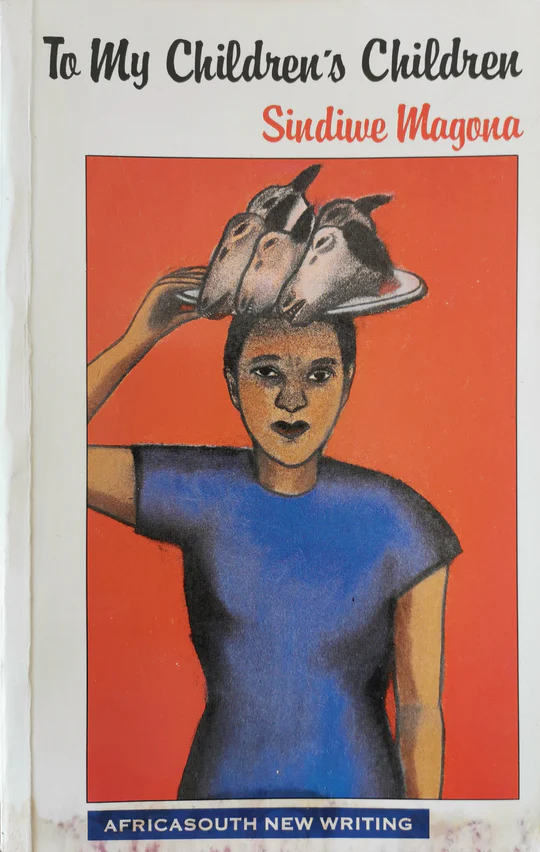
To understand the full breadth of her legacy, one must look at how she transitioned from chronicling her own life to becoming a fierce advocate for social change through fiction. While her memoirs broke new ground, her novel ‘Mother to Mother’ stands as a monumental achievement in empathy, forcing readers to look at the systemic roots of violence with a compassionate eye. She didn’t stop there; in Beauty’s Gift (2008), she tackled the devastating impact of the HIV/AIDS pandemic on professional women in South Africa, using a narrative of friendship and sisterhood to break the silence surrounding the disease.
Her work in children’s literature, including the series Living, Loving and Lying Awake at Night (1991), further solidified her role as a cultural custodian, ensuring that Xhosa heritage and the lived realities of township life were documented with dignity and grace. Her other notable works include The Best Meal Ever! (2006), Beauty’s Gift (2008), Please, Take Photographs (2009), The Woman on the Moon (2014), Chasing The Tails of My Father’s Castle (2016), Books and Bricks (2016), Vukani (2016), The Ugly Duckling (2016), From Robben Island to Bishopscourt (2016), and Clicking with Xhosa: A Xhosa Phrasebook (2016). Through these works, Magona transformed the act of storytelling into a tool for national healing and a bridge across the divides of race, age, and class.
Honours
The world has stood up to applaud Sindiwe Magona many times over. She spent over 20 years working for the United Nations, using her platform to advocate for social justice. In South Africa, she was awarded the Order of Ikhamanga (Bronze) – Presidential Award and the highest such award in South Africa – for her exceptional contribution to literature and her work in the struggle for democracy.
She received the Grinzane Cavour Prize ‘for writing that addresses social concerns’. Her other recognitions include Molteno Gold Medal (2007) for promoting Xhosa culture and language, and Lifetime Achievement Award (2007) for her contribution to South African literature. These awards recognize a woman who turned her personal struggle into a universal message of hope.
Today, Sindiwe remains a vibrant and active force in the literary world. She is often seen mentoring young writers, conducting workshops, and advocating for literacy in mother-tongue languages. She lives by the philosophy that “it is never too late to be what you might have been.” Even in her eighties, she continues to write and speak with a fire that inspires everyone who crosses her path. She is not just an author; she is a national treasure – a “Makhulu” (Grandmother) to an entire generation of African thinkers.
That brings us to the end of this week’s Spotlight on the mother of resilience, Sindiwe Magona. Be sure to join us for our next edition, where we will look into the life and works of another literary giant whose words impacted the course of history.


