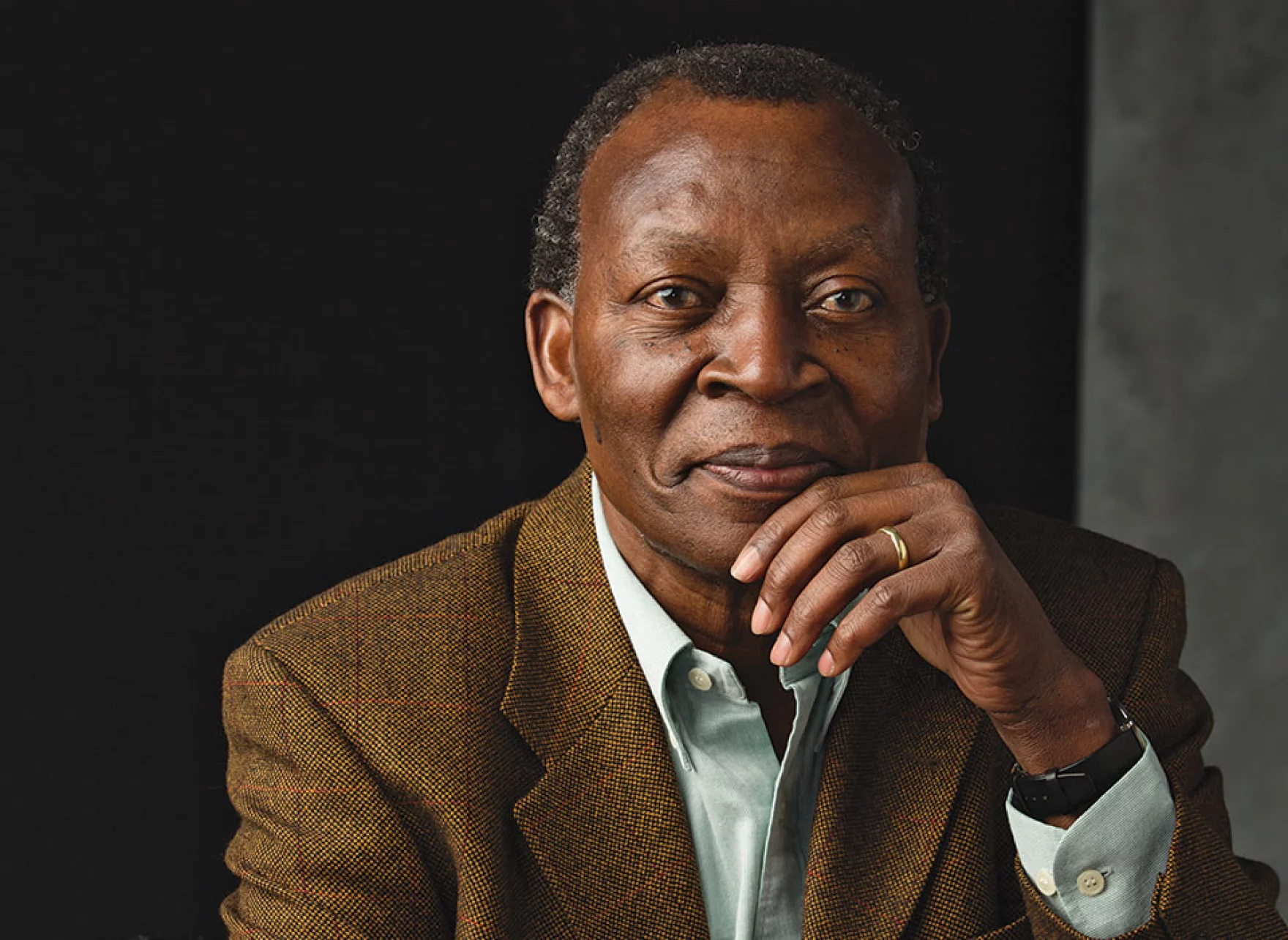
In this edition of Author Spotlight, we will examine the life and works of Ethiopian-American novelist and journalist, Dinaw Mengestu. One of contemporary literature’s most perceptive observers of displacement, Mengestu is an architect of the immigrant experience whose lucid prose maps the intricate geography of memory, exile, and belonging.
Birth and Early Years
Born in 1978 in Addis Ababa, Ethiopia, Mengestu entered the world during the turbulent political upheaval of the Red Terror. His father had previously fled to Italy and applied for political asylum, and when Mengestu was two years old, he, his mother, and his sister reunited with his father in the United States. Growing up primarily in Peoria and Chicago, Illinois, he navigated the quiet displacements of growing up between worlds, developing an early, acute awareness of the invisible borders that separate cultures, languages, and histories.
Education
Mengestu’s academic journey refined his distinct narrative voice. He earned his Bachelor of Arts in English from Georgetown University in Washington, D.C., before pursuing his Master of Fine Arts in Fiction at Columbia University. This rigorous training grounded his style in precision and emotional restraint, allowing him to tackle vast historical traumas through sharply focused, intimate human lenses.
Influences
Mengestu’s writing was influenced by an engagement with global migration, post-colonial politics, and the psychological weight of uprooting. Beyond his fiction, his work as a freelance journalist covering conflicts in Darfur, northern Uganda, and eastern Congo for publications like Rolling Stone and Harper’s Magazine also informed his artistic vision. He was drawn to the subtle, everyday realities of ordinary people caught in the crosshairs of macro-level history, influenced by literary traditions that prioritize psychological depth, historical witness, and the quiet dignity of outsiders.
Literary Legacy
To read Dinaw Mengestu is to experience storytelling defined by empathy, architectural elegance, and an unsparing look at the modern immigrant condition. Where grand historical accounts often flatten migration into statistics, Mengestu focuses on the lingering ghosts of home, the weight of nostalgia, and the complex friction of trying to anchor oneself in a new land that often refuses to fully see you.

Mengestu’s literary legacy was established immediately by his dazzling debut novel, The Beautiful Things That Heaven Bears (2007), which chronicles an Ethiopian immigrant running a failing grocery store in a gentrifying Washington, D.C. neighborhood while mourning his past. He expanded his scope with How to Read the Air (2010), a poignant excavation of a father’s past and a son’s attempt to understand his lineage, and All Our Names (2014), which traces a searing love story and political revolution across continents. His critically acclaimed novel, Someone Like Us (2024), further cemented his stature by following an Ethiopian-American journalist returning to Washington, D.C., to unpack a hidden family history defined by loss and the enduring pull of home.
Honours
Mengestu’s achievements have earned him some of the highest literary accolades in the world. He was selected as a prestigious MacArthur Fellow in 2012 and named one of The New Yorker’s “20 Under 40” fiction writers. His debut earned him the Guardian First Book Award, the Los Angeles Times Book Prize, and the National Book Foundation’s “5 Under 35” honor in 2007. Alongside his writing, he has shared his expertise in academia, serving as the Program Director of the Written Arts Program at Bard College.
Dinaw Mengestu remains an indispensable figure in contemporary letters. Through his rigorous journalism and profound psychological fiction, he ensures that the complex narratives of modern exile and the invisible lives shaping our globalized world will forever hold a central place in our collective consciousness.
That brings us to the end of this week’s Spotlight on the chronicler of displacement, Dinaw Mengestu. Be sure to join us for our next edition, where we will look into the life and works of another literary giant whose words impacted the course of history.