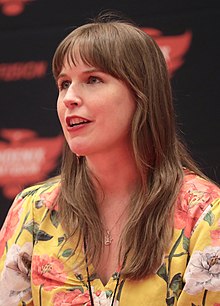
What happens when a corporate human capital expert and biochemist turns her analytical eye toward the deeply rooted systems of African society? You get the evocative, thought-provoking fiction of Adaora Chinwe I. Ogunniyi.
Born in Kaduna, rooted in Anambra, and now navigating the bustling literary landscape of Lagos, Adaora’s life is as multifaceted as her writing. After nearly two decades in the corporate world and agribusiness, she formalised her lifelong passion for storytelling with a Postgraduate Certificate in Creative Writing from the University of Oxford and an MA from the University of Hull.
Her debut novel, Waves Aligning (2019), powerfully tackled systemic inequalities in girl-child education. Now, she returns with her highly anticipated sophomore novel, The Steel Gavel (2025)—a searing, cross-cultural love story that fearlessly confronts the lingering, quiet shadows of the Osu caste system in South-East Nigeria.
We sat down with Adaora at the Naija Book Club to dive deep into a wide range of issues.
Read our full, exclusive conversation below.
Naija Book Club: You were born in Kaduna, have Igbo heritage, and spent your childhood living and schooling in different parts of Nigeria. How did growing up across different places and encountering different people shape the way you understand Nigerian identity, culture and human relationships?
Adaora Ogunniyi: … Ha, ha, ha! You forgot to add ‘Married a Yoruba man.’ You can say that I have been blessed with the good fortune of an expansive reach, because my growing up years experienced a wealth of tribes and tongues. I attended a mixed-gender military boarding school, and anyone who knows a thing or two about the military will tell you that it is a cauldron of cultures, convictions, conducts, tribes, temperaments and tongues. Yet I lived, learned, won, failed and grew with my schoolmates. In my eyes, every child I knew then was not a microcosm of a state, tribe, or tongue. Every child was one thing and one thing alone—a child; we all shared the same human conditions. Anyone could be up to antics, anyone could be kind, anyone could be vulnerable, and anyone could be a bully or the bullied. As I grew older and my horizons expanded, my childhood experiences and the whiplash of adulting birthed in me not only an awareness but a conviction of how uniquely the same we all are.
Naija Book Club: Is there a particular story, storyteller or childhood experience that you can trace to the kind of writer you have become today?
Adaora Ogunniyi: … Too many storytellers to count; It is an impossible list that includes Guy de Maupassant, Chinua Achebe, Danielle Steel, Leo Tolstoy, Buchi Emecheta, Arundhati Roy, Jane Austen, Collen Hoover, John Grisham, Flora Nwapa, to mention but a few. But my introduction to storytelling can only be credited to my dear, dear grandfather. My grandfather, while sitting under the moonlight in the night’s breeze, chaperoned me through the winding streets of storytelling. His eyes, vacant with wonder, used to gaze at somewhere… something far, far away, almost oblivious of his favourite five-year old. My grandfather told me stories of ordinary people, making sense of the far-from-ordinary human condition. And he told them in ways that made me willing to leave our world, as we know it, and jump right into the world he was fleshing out in that far, far away place. He told stories simply for storytelling’s sake. I miss him. Today, I try to write in a way that not only possesses enough power to grip my readers by the hand and take them into my imagined worlds but to keep them in it for as long as the journey goes. And most importantly, for them to feel the warmth of that grip, long after I let go.
Naija Book Club: Your debut novel, Waves Aligning, explores the struggles of a young African girl and the unequal opportunities available to girls, particularly in education. What inspired you to tell this story, and was there a particular experience or observation that made the story especially important to you?
Adaora Ogunniyi: … Being the first of three girls and a boy who was born when I was in my early teenage years, I experienced, first hand, what it meant to be ‘not quite enough’ in Igbo land. I also watched, with keen interest, how the birth of a baby boy, in most parts of Nigeria, received more pomp than that of a baby girl. How, for some uncanny reason, the woman often received a larger chunk of the blame cake for the disappointment of birthing a baby girl, instead of a baby boy. And how this system of living rested easy on the consciousness and conscience of the enclave. But as I grew older, I began to observe how nuanced the factors surrounding this system could be. For instance, there are men who do not quite buy it, but are bullied into ‘obeying tradition.’ There also are women, and men, who refuse to bend to such repressive systems and fight to their bones to have those systems dismantled. I wanted to write a story that captures the weakness of cultural systems while applauding the strength in those who dare to oppose it.
Naija Book Club: In many Nigerian communities, the education of a girl can still be influenced by family expectations, financial circumstances and cultural beliefs about a woman’s place in society. What did you most want readers to understand about the girl child through Waves Aligning?
Adaora Ogunniyi: … Waves Aligning is about feminine repression in a pseudo-modern society, so there could be an appearance of equal opportunities until the chips are down. For instance, in Chinny’s case, she could go to school, until her older brother gained his own admission, only after his third attempt at the entrance examinations. My protagonist embodies a character who swam and surmounted the ferocious waves of life. She dared the odds. After the final page, I want readers to sit with this quote by Marianne Williamson; “… Our deepest fear is not that we are inadequate. Our deepest fear is that we are powerful beyond measure. It is our light, not our darkness that most frightens us. We ask ourselves who am I to be brilliant, gorgeous, talented and fabulous? Actually, who are you not to be.”
Finances can be a real factor, and we cannot help but acknowledge this. But in Waves Aligning, I underscore the human spirit which at its core, is resilient and daring and audacious. In the quest for solutions, most times, it serves to ‘not see a box’.
Naija Book Club: As a Nigerian writer with Igbo heritage who has lived and interacted with people from different cultural backgrounds, how do you approach writing about cultural experiences that may not be your own?
Adaora Ogunniyi: … I often hear phrases like, ‘Write what you know’. That is good. But I’ll wager that in real life, half the time, many of us do not know what we are doing; we are merely doing our best to find our way around this labyrinth called living. So, to your question, I write characters who are victims of observed cultures and traditions. Even the proponents of said traditions do so because they either received it or gain from it; they are victims of a lulled consciousness. I carry out primary and secondary research, but my characters ultimately present as flawed humans; most times, they react from a place of ignorance, and sometimes they react from an informed place.
Naija Book Club: What responsibilities, if any, do you believe a writer has when representing another community or its traditions?
Adaora Ogunniyi: … I am a firm believer in the subjective nature of storytelling and how it is received. By this I mean that even after a writer has gone far and beyond, as they should, to exorcize misappropriation from their works, once it goes into the world, the world is free to do with it as it pleases. It is important, especially in realism, to make narratives as believable as possible. By every means, writers should invest in research but must be wary of travelling down a rabbit hole of acute sensitivity, to the point of hopping from foot to foot rather than investing in the creative core of their project, twisting their works beyond recognition and inadvertently squeezing the spirit of the story out of the story.
Naija Book Club: Your published short story My Name Is Adaiba was a finalist in the 2024 Adelaide Literary Award contest. Without giving away too much of the story, what drew you to that particular narrative, and what did the experience of having it recognised in an international literary competition mean to you?
Adaora Ogunniyi: … I wrote ‘My Name Is Adaiba’ for a paper during my MA in Creative writing at the University of Hull. At the time, thanks to globalisation and technology, a series of reported cases heightened my awareness of sexual abuse in children and the culture of silence in society. This made me begin to think about how victims living in pre-technology times managed (or are managing) their trauma. Or not. I find many of my materials from mining the library of consciousness all around us. My work is rooted in African cultural narratives, and even if I were to stick to one country alone, Nigeria, I would have over three hundred ethnic groups to glean narratives from. So, a question I am often asked is if I am not limiting my reach by confining my works to African narratives alone. My sophomore novel, The Steel Gavel explores the Osu Caste system still practiced, albeit nuanced, in Igbo land. Readers may draw parallels with the more known Indian caste system, but may also recognise how the emotions, struggles, fears and aspirations my characters portray belong to us all. Having ‘My Name Is Adaiba’ not only recognised on the international scene but also translated to Portuguese, is a testament to how African cultural narratives have the power to cross maps and borders to hold a mirror to our shared human experiences.
Naija Book Club: You have studied Creative Writing at the University of Oxford and the University of Hull. What did formal creative-writing education teach you about your craft that you might not have learnt on your own?
Adaora Ogunniyi: … I studied Applied Biochemistry in undergraduate school, but as cliché as it sounds, I have always loved to tell stories. So, to further hone my writing skills, I enrolled for courses in Creative writing, one of which was with the University of Oxford. Yet the time I spent studying for my Masters degree at the University of Hull, proved to be pivotal in my writing journey. It named and validated many of my prior creative choices, developed and sharpened my critical eye, and broadened my perception of creative possibilities by dragging me through works I believed were beyond my bounds of reading pleasure. For instance, I never would have unearthed the joys of Kafka’s ‘Metamorphosis’, Melville’s Bartleby, Mansfield’s ‘The Voyage’, James Joyce’s Dubliners or Woolf’s Mrs Dalloway. My formal creative writing education also taught me to, in Anne Lammot’s words, “Write as if my parents are dead”. And to also trust my process, even when, to take a leaf from E.L. Doctorow, it feels as if I am walking down a dark narrow tunnel with a dim torchlight. But my overarching answer would be this—Writing is often a lonely path, but my time at Hull offered me steady support, access to a bottomless well of ideas and a handful of writerly friends with whom I can now travel this sometimes, lonely, sometimes sad, and sometimes happy literary landscape.
Naija Book Club: On the other hand, is there anything about the writing process that you feel can only be learnt through practice and experience?
Adaora Ogunniyi: … Yes. Cutting is excellent writing. This can only be learned through practice and experience.
Naija Book Club: Finally, what can readers look forward to from you next? Are there new stories, themes, or forms of writing you are currently exploring that you can tell us about?
Adaora Ogunniyi: … Certainly. I never stop building worlds and fleshing out characters. My third novel is 98% done and I am excited to share it with the world; it is something I cannot stop writing about in my monthly newsletters. Readers can expect another African cultural narrative with many imperfect people, doing perfectly stupid things and trying their best to get out of it. It may be an entirely different story form. Or have elements of the unexpected. Or be a sequel to something from before. Who knows, right?
Did you enjoy our interview with Adaora? Please share it. We are encouraged to bring you more interesting interviews from African writers. Stary tuned!