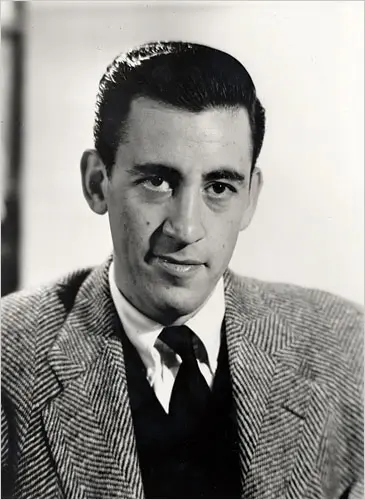
In this edition of Author Spotlight, we will examine the life and works of renowned Zimbabwean poet and novelist Chenjerai Hove, a man who was often described as the “conscience of Zimbabwe.” Hove wasn’t just an author; he was a poet-prophet who used the English language to capture the rhythmic, proverbial soul of the Shona people. He believed that a writer’s job was to be the “memory of the nation,” especially when that nation was trying to forget its own shadows.
Birth and Early Years
Born on February 9, 1956, near Mazvihwa in what was then Rhodesia, Chenjerai grew up in a world defined by the tension between colonial rule and the rising tide of liberation. He was a child of the soil, raised in a rural environment where the oral traditions of the Shona people were the primary way of making sense of the world. This upbringing gave him a “dual citizenship” of the mind: he understood the western structures of the colonial school, but his heart beat to the drums of village storytelling.
Education
Chenjerai’s education was a journey through some of Southern Africa’s most respected institutions. He trained as a teacher at Gweru Teachers’ College and later earned degrees from the University of South Africa and the University of Zimbabwe. He didn’t just study literature; he lived it. As a young man, he worked as a teacher and an editor, helping to shape the voices of other Zimbabwean writers. He saw education not as a way to escape his roots, but as a set of tools to help him dig deeper into them.
Influences
Hove’s writing was forged in the fire of the Zimbabwean War of Liberation (the Chimurenga). He saw firsthand the hope of independence and the bitter disillusionment that followed when the new heroes began to act like the old oppressors. He was deeply influenced by the Shona language’s poetic structure – the way a single proverb can hold a thousand years of wisdom. He was also a man of deep moral conviction, influenced by the global struggle for human rights and the belief that a writer must never be a “praise singer” for a dictator.
Literary Legacy
To read Chenjerai Hove is to hear the wind blowing across the Zimbabwean highveld and the whispered conversations of those the world often ignores – the peasant farmers, the mourning mothers, and the exhausted soldiers. He had a rare gift for taking the trauma of war and the ache of poverty and turning them into something that felt like a sacred song. He was a man who loved his country so deeply that he was willing to tell it the most painful truths, even when it cost him his home.

Hove’s literary legacy is perhaps most defined by his 1988 novel, “Bones.” It was a revolutionary book because it didn’t just tell a story; it sang one. Written in a style that translated the idioms and rhythms of Shona into English, it told the story of Marita, a farm worker whose son had gone off to fight in the war. It wasn’t a glorification of battle; it was a meditation on the heavy price that ordinary people pay for “freedom.”
His other major works, like Shadows (1991) and Ancestors (1997), continued this exploration of the spiritual and physical landscape of Zimbabwe. He was also a prolific poet, with collections like Up In Arms (1982), Red Hills of Home (1984), and Rainbows in the Dust (1997). He proved that you could write a “political” novel that was also a work of high art, ensuring that the voices of the rural poor would never be erased from the history of African literature.
Honours
The world was quick to recognize Hove’s brilliance. In 1989, “Bones” won the Noma Award for Publishing in Africa, the continent’s most prestigious literary prize. The award jury praised the book as a powerful, moving, and ambitious work, written with exceptional linguistic control to portray the suffering and hopes of people in post-independence Zimbabwe. Hove was a founding member of the Zimbabwe Writers Union and served as its president, helping to put Zimbabwean literature on the global map. He travelled the world as a guest of prestigious institutions, including Brown University, International Parliament of Writers, and the International Cities of Refuge Network.
Sadly, Chenjerai Hove’s commitment to the truth made him a target. After speaking out against the government’s human rights abuses in the late 1990s, he faced intense harassment and eventually chose the path of exile in 2001. He spent his final years living in France, the Netherlands, and Norway, continuing to write and advocate for a free Zimbabwe from afar. He died in Norway in 2015, a “nomad of the spirit” who never truly left the soil of Mazvihwa. He remains a symbol of the artist who refuses to blink, even when staring down a lion.
That brings us to the end of this week’s Spotlight on the voice of the dispossessed, Chenjerai Hove. Be sure to join us for our next edition, where we will look into the life and works of another literary giant whose words impacted the course of history.