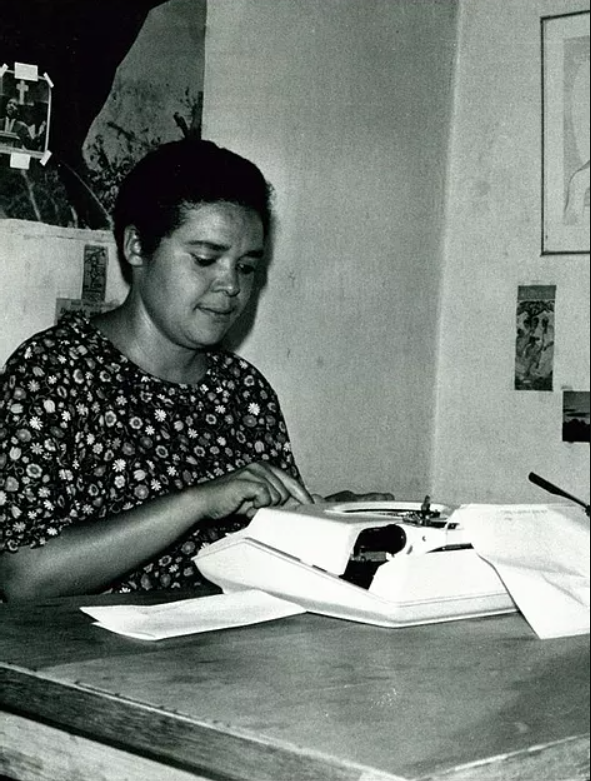
In this edition of Author Spotlight, we will examine the life and works of renowned Somali novelist Nuruddin Farah, one of the most recognised African novelists of the 20th century. To read Nuruddin Farah is to take a journey through a country that is often misunderstood by the rest of the world. While many see Somalia only through the lens of conflict, Farah sees it as a complex web of family, ancient tradition, and the relentless struggle for individual freedom. He has spent his life writing about a home he was forced to leave, proving that a writer’s truest country is often found within their own pages.
Birth and Early Years
Born in 1945 in Baidoa, in what was then Italian Somaliland, Farah grew up in a household that was a microcosm of the world’s linguistic diversity. His father was an interpreter for the British, and his mother was a talented oral poet. In his house, you might hear Somali, Arabic, Amharic, Italian, and English – all in a single afternoon. This polyglot upbringing didn’t just give him a gift for languages; it gave him the ability to see the world from multiple perspectives at once – a skill that would later define his mastery as a novelist.
Education
Education took Nuruddin far from the dust of his childhood home. He eventually travelled to India to study at Panjab University in Chandigarh. It was there, thousands of miles away from the Horn of Africa, that he began to write in earnest. He didn’t just study literature; he studied the way societies put themselves together and tear themselves apart. By the time he returned to Somalia to teach, he wasn’t just an academic; he was a writer with a mission to challenge the status quo.
Influences
Farah’s influences are a unique blend of the local and the global. On one hand, he was deeply shaped by the rich tradition of Somali oral poetry – specifically the way his mother used language to navigate a world that often tried to silence women. On the other hand, his exile (which lasted over 20 years) became a major influence. Being a permanent outsider allowed him to critique Somali society with a sharp, objective eye, especially regarding the patriarchal structures and the dictatorial rule of Siad Barre, which he fled in the 1970s.
Literary Legacy
Farah’s literary legacy is built on his monumental trilogies, most notably the Variations on the Theme of an African Dictatorship and the Blood in the Sun trilogy. He is perhaps best known for his revolutionary portrayal of women; he famously said that he writes about women because they are “the most oppressed people in our society.” His masterpiece, Maps, explores the blurred lines between national identity and personal truth, cementing his reputation as a writer who isn’t afraid to ask the hardest questions about who we are and where we belong.

To really appreciate the scale of Farah’s contribution, you have to look at how he builds worlds through his trilogies. His most towering achievement is arguably the “Blood in the Sun” trilogy – comprising Maps (1986), Gifts (1993), and Secrets (1998) – where he dissects the Somali identity against the backdrop of war and cultural upheaval. Maps, in particular, is a masterclass in post-colonial literature, using the literal and metaphorical boundaries of a nation to explore a person’s sense of self.
He also didn’t shy away from political fire; his earlier trilogy, “Variations on the Theme of an African Dictatorship” – comprising the novels Sweet and Sour Milk (1979), Sardines (1981), and Close Sesame (1983) – was a daring and dangerous critique of authoritarianism. Through these works, Farah didn’t just write novels; he created a literary map of a nation’s conscience, proving that the pen can be more enduring than any political regime.
Honours and Recognition
The world has long recognized Farah as a perennial contender for the Nobel Prize in Literature. His mantle is crowded with prestigious awards, including the Neustadt International Prize for Literature – often seen as the “lead-up” to the Nobel. He has also received the Tucholsky Prize in Sweden and the Lettre Ulysses Award in Germany. These honors aren’t just for his prose; they are for his courage in continuing to write about a homeland that, for a long time, would not let him return.
The Nomad Intellectual
One of the most interesting things about Nuruddin Farah is his life as a global citizen. He has lived and taught in countries across the globe, from Nigeria and Gambia to Germany and the United States. Despite living in Cape Town for many years, his mind and his pen never truly left Somalia. He remains a man who lives in the “in-between,” using his status as an exile to bridge the gap between African realities and global understanding.
That brings us to the end of this week’s Spotlight on the cartographer of the Somali soul, Nuruddin Farah. Be sure to join us for our next edition, where we will look into the life and works of another literary giant whose words changed the course of history.